CCS and Decommissioning
Providing permitting and environmental assessment services for Carbon Capture and Storage and marine infrastructure decommissioning projects around the UK
The transition to clean energy is introducing, re-purposing and decommissioning marine infrastructure. Our marine consultants navigate the complex permitting requirements of Carbon Capture and Storage (CCS), hydrogen and other new technologies, alongside the decommissioning of existing projects, with a comprehensive understanding of OSPAR, EU and UK legislation.
ABPmer has a proven track record providing developers with consenting advice, environmental assessments and supporting studies, ensuring the permitting process is handled cohesively, saving time, reducing risk and improving the quality of submissions.
We support developers seeking Marine Licences as well as Department for Energy Security and Net Zero permits for:
Drilling operation
Well Intervention operation
Pipeline operation
Decommissioning operation
Standalone application
Explore this page |
Consenting advice
The consenting of CCS and decommissioning projects can be complex, accounting for national and international policy and legislation.
ABPmer has a wealth of experience supporting developers and regulators in offshore developments and decommissioning activities. Our dedicated consent and licensing specialists provide advice and consultation for all stages of a project’s lifecycle, from feasibility and site selection through to the supporting assessments for consent, securing mitigation and compensation measures, stakeholder engagement and ongoing post-consent support through the construction, operational and decommissioning phases.
Environmental assessments
We take a proportionate and evidence-based approach to environmental assessments, coordinating all activities needed to meet the requirement of each Master Application Template (MAT) and Subsidiary Application Template (SAT) for optimal efficiency. Our specialists undertake all types of assessment including:
Environmental Assessment Justifications (EAJs)
Chemical Risk Assessments (CRAs)
Habitats Regulations Assessments (HRAs)
Geophysical specialist studies (e.g. seabed mapping, modelling and landfall assessments)
Ecological specialist studies (e.g. habitat mapping)
Industry recognised for our commitment to excellence in the production of Environmental Impact Assessments (EIAs), we deliver a bespoke service, either coordinating the whole process from start to finish, or contributing to EIA elements as required, through the delivery of specialist marine assessments, including:
Marine physical process and oceanographic studies
Water and sediment quality assessments
Marine ecology assessments, including underwater noise
Fisheries assessments
Ornithological survey and analysis
Maritime navigation reviews
Our specialists are committed to robust and transparent analysis for all types of assessment, tailored to location, the nature of the development and project risks, supported by numerical modelling, marine survey and other bespoke assessments.
Stakeholder engagement
With CCS and decommissioning activities attracting continued interest from parties both within and outside the oil and gas sector, particularly regarding environmental, social and economic impact, building consensus among stakeholders is critical to a successful application. Our skilled team facilitates meaningful communication with all interested parties, fostering collaboration and reducing risks throughout the consenting process. The result: smoother interactions with Offshore Petroleum Regulator for Environment and Decommissioning (OPRED), the Marine Management Organisation (MMO) and other regulators, and reduced potential for delay.
Regulatory submissions
Our regulatory consultants bring together spatial plans, environmental constraints and permit documentation, translating the technical findings into clear, regulator-ready submissions that meet the requirements of OPRED, the Portal Environmental Tracking System (PETS), and the MMO as required.
We guide you through the complex consent processes and separate consenting requirements of CCS and decommissioning projects at all stages, as well as licensing and environmental impact considerations.
ABPmer’s experienced marine specialists bring critical knowledge to ensure regulatory compliance and environmental integrity. Our ecologists play a vital role in evaluating potential impacts on sensitive marine ecosystems:
Our toxicologists assess the environmental risks of chemical discharges (including CHARM and other models), supporting the preparation of Chemical Risk Assessments (CRAs) required for chemical discharge consents
Our ornithologists contribute to Habitats Regulations Assessments (HRAs), particularly when proposed activities may affect seabird populations or designated Special Protection Areas (SPAs)
Our marine mammal specialists are critical for obtaining European Protected Species (EPS) licences, ensuring that activities such as seismic surveys or drilling operations (if required) do not disturb cetaceans or pinnipeds
Our benthic ecologists evaluate potential impacts on seabed habitats, including protected features like Sabellaria spinulosa reefs, which are often key considerations in Marine Licence applications and HRAs
Our geomorphologists characterise seabed morphology and processes driving its evolution. This understanding informs supporting studies such as seabed mobility assessments and habitat mapping. Their work supports the technical justifications required for CCS Permits and ensures alignment with the North Sea Transition Authority (NSTA)’s expectations for site integrity and monitoring
Our GIS specialists and data analysts support spatial planning, mapping of environmental constraints, and integration of survey data into permit documentation. Our regulatory consultants then bring all these inputs together, translating technical findings into clear, regulator ready submissions that meet the requirements of OPRED and MMO
This integrated, cross-disciplinary approach ensures that all permitting aspects, from environmental assessments to stakeholder engagement, are handled cohesively. It reduces duplication, improves the quality of submissions, and helps developers avoid costly delays or compliance risks.
Survey and monitoring
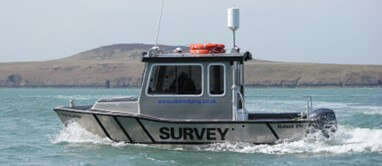
On-site data collection underpins multiple stages of CCS permitting. Our specialist surveyors are experienced in conducting a wide range of coastal and nearshore surveys, including:
Habitat mapping to inform impact assessments to support marine licence applications
Ornithology surveys to inform Habitats Regulations Assessments (HRAs)
Benthic ecology surveys
Marine mammal surveys to inform European Protected Species (EPS) licence applications
Technical studies
We have extensive expertise in a wide range of studies required to support CSS and decommissioning permit applications.
Our numerical modellers and marine physical process specialists routinely support offshore developments with hydrodynamic, wave, sediment transport and water quality modelling, metocean studies and landfall assessments.
Our marine environmental consultants are highly experienced in the delivery of environmental assessments, chemical risk assessments (ecotoxicology modelling included) and underwater noise modelling.
Our experienced surveyors collect hydrographic, geophysical and ecological data for analysis by our in-house teams.
Our maritime specialists support the minimisation of marine risk through vessel traffic studies and navigation risk assessments.
Ready to discuss your CCS, decommissioning or energy transition project? Get in touch.