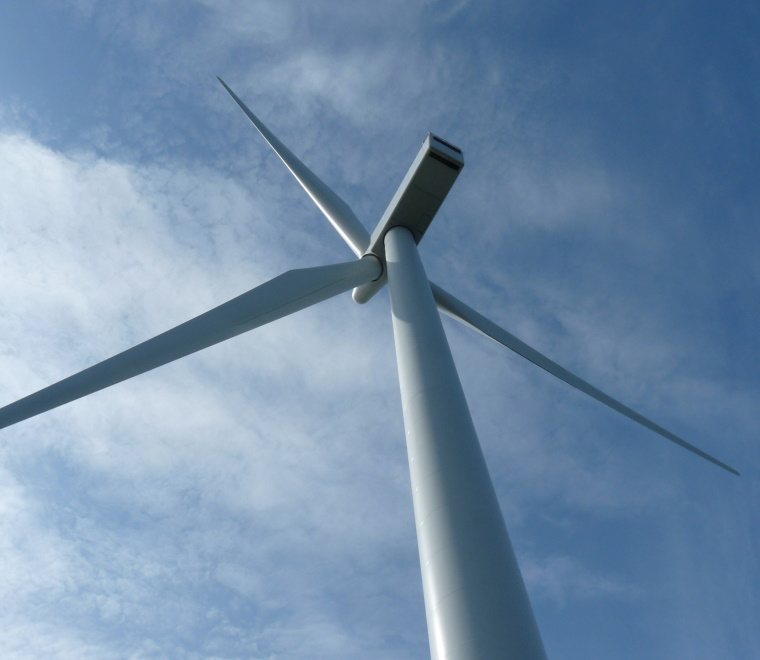
ABPmer supporting new offshore wind plan in Scottish waters
INTOG aims to facilitate innovative projects, and projects aimed at decarbonising the oil and gas sector in Scotland. Learn more.
Read article

Renewables | Policy Support | Climate Change
A joint review undertaken with Atkins considers how the current UK development and consenting process might support or hinder Floating Offshore Wind ambitions
Navigation
The UK Government and Devolved Administrations have set ambitious climate change and carbon reduction targets to achieve ‘Net Zero’ by 2050. Offshore wind (OSW) is seen as critical in helping to deliver those targets and enable the switch from fossil fuels across domestic, industrial and transportation energy use.
If the UK is to achieve the overall offshore wind growth targets needed to deliver the UK Government’s energy ambitions,(1) the development of floating offshore wind (FOW) is vital. As a result, the number of FOW projects are expected to increase significantly in the UK and around the world over the next 20 years.
To meet the targets, deployment of OSW will have to go beyond the relatively shallow inshore waters of the North Sea and Irish Sea. Locating FOW in deeper waters, further offshore, brings the potential of accessing areas with more consistent, powerful and predictable wind resources. Despite being perceived by some as being less environmentally constrained compared with more inshore developments, these sites will still have their own challenges.
To a degree, FOW can learn from the fixed bottom OSW sector how to manage potential risks and the approach to mitigation, there are notable differences in terms of possible locations, foundation design, construction activities, sectors affected, and potential economic and environmental impacts.
Commissioned by ORE Catapult, we have co-produced with Atkins ‘Floating Offshore Wind Development and Consenting Process -Risks and Opportunities’. The work considers the development and consenting processes around the UK for commercial FOW farms. This includes identifying risks and opportunities to commercial projects in UK waters and making recommendations as to how risks could be mitigated, opportunities realised, and key evidence gaps filled.
Lack of specific provision for FOW in current leasing
Uncertainty how FOW can compete for financial support
Understanding of wind resource in areas further offshore / with greater water depth
Technology requirements
Grid infrastructure
Difficulty of survey / data collection further offshore
Potential footprint may cause displacement of already established sectors
Unlocking resource / increasing capacity
Regional differences in planning process facilitating development
Utilisation of existing marine infrastructure and technology from other sectors and fixed OSW
Using transferable skills and resource from other sectors and fixed OSW
Developing FOW-specific supply chain
Environmental impacts will reduce in scale and uncertainty relative to fixed OSW
A key message from the report is that we need to continue to invest in FOW as a nation. Some of the risks faced are at levels that cannot be resolved without significant public investment and support, whilst other important considerations can be addressed through smaller packages of investment, focused work outputs, engagement with particular stakeholders and, in some instances, different engineering approaches.
Download the report from the ORE Catapult website.
(1)^The UK Government has planned to deliver 40 GW of energy from offshore wind by 2030, contribute to as much as 70 GW of floating wind being installed globally by 2040, and meet the Committee on Climate Change’s recommendation of 100 GW or more by 2050.
‘Floating offshore wind development and consenting process – risks and opportunities’ is a summary of an extended report produced for ORE Catapult by Atkins and ABPmer. The full report covering sector-specific aspects and stakeholder input is available to members of the ORE Catapult’s Floating Offshore Wind Centre of Excellence.
ABPmer assists the renewables sector throughout the project lifecycle; from site selection and feasibility, through environmental impact assessment and consenting to engineering design, construction and operation and maintenance.




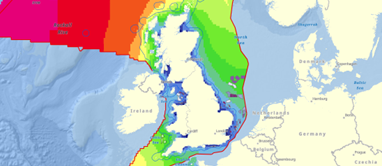
INTOG aims to facilitate innovative projects, and projects aimed at decarbonising the oil and gas sector in Scotland. Learn more.
Read article
The IPCC report highlights the importance of accelerating offshore wind deployment as a key contributor to net zero. Learn more.
Read article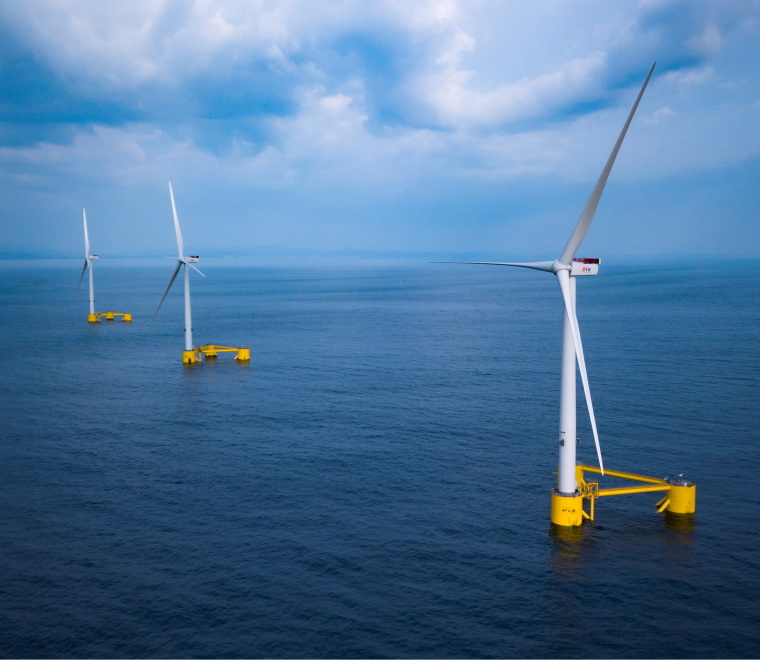
ABPmer will deliver the certifiable metocean design bases to inform FEED and Detailed Design for two Celtic Sea floating offshore wind projects. Learn more.
Read article